
PRODUCT
PRODUCT
CONTACT US
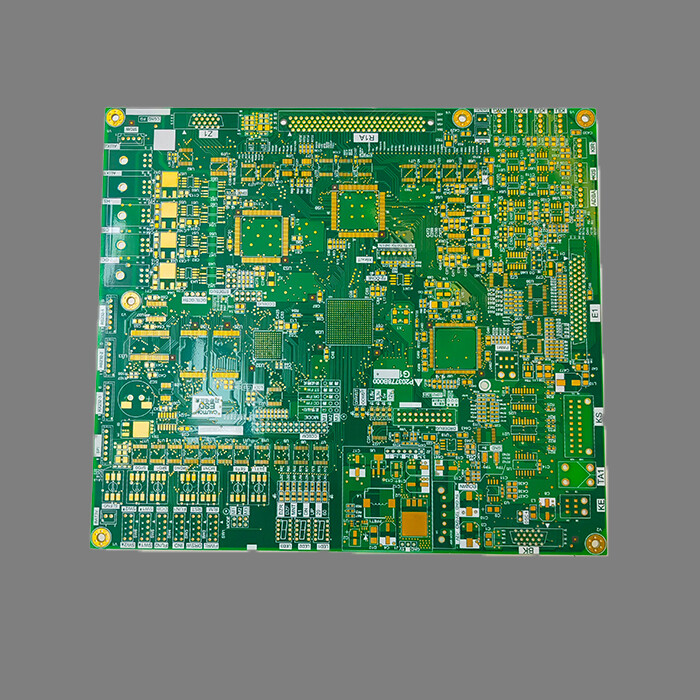
Brief Introduction of Industrial Control PCB
Industrial Control PCB board. They are printed circuit boards designed and manufactured for industrial environments such as factory automation, process control, robotics, testing and measurement equipment, and power systems. Their core mission is to ensure high reliability, strong anti-interference ability, and stability in harsh, variable, and long-term uninterrupted operation environments.
Key Parameters of Industrial Control Elevator PCB
PCB for Elevator Servo Systems
Brand Name: HFast
Size: 500mmX2000mm
Layers: 4L
Board Thickness: 1.60mm
Minimum Hole Size: 0.25mm
Minimum Line Width: 0.15mm
Minimum Line Spacing: 0.15mm
Color: Green Oil and White Legend
Surface Treatment: Gold Plating
Key technical elements of Industrial Control PCB
1. Material selection - the cornerstone of reliability:
Substrate:
*High Tg FR-4: The most commonly used and cost-effective option (Tg ≥ 150 ° C, 170 ° C). Satisfy most industrial environments.
*Polyimide: Used for extreme high temperature, flexible or rigid flexible applications.
*Metal substrate: Aluminum substrate (IMS) is used for high-power LED lighting, motor drives, and other applications that require excellent heat dissipation.
*High frequency materials: such as Rogers, used for wireless communication modules (industrial Internet of Things), radar, etc.
*Thick copper plate: Used for carrying high current power distribution and motor drive parts (such as 2oz, 3oz or even thicker copper foil).
*Copper foil: Select thickness and type based on current and signal requirements (low roughness copper foil is used for high-speed signals).
*Solder mask: Requires high heat resistance, high adhesion, excellent chemical resistance, and electrical insulation. The color is mostly green, but there are also blue, black, red, etc. used for differentiation or aesthetics.
*Surface treatment:
*Nickel immersion gold: Gold standard, good flatness, excellent solderability, corrosion resistance, suitable for fine pitch components (BGA, QFN) and multiple soldering. The cost is relatively high.
Sinking silver:Low cost, good weldability, and smooth welding surface. Attention should be paid to preventing sulfurization and blackening (which can be achieved by coating a protective layer or selecting sulfur resistant silver).
*Organic solder mask: Lowest cost, protects copper surface from oxidation. However, the weldability has a short shelf life and relatively weak resistance to harsh environments, which limits its application in high demand industrial boards.
Sinking tin:Good solderability and moderate cost. Attention should be paid to the risk of tin whiskers (which can be mitigated through process control).
*Electroplated hard gold: Used for high insertion and extraction frequency connector gold fingers, wear-resistant.
2. Design and Layout Routing - The Soul of Performance and Reliability:
*EMC/EMI design priority: EMC should be considered from the schematic stage, with strict zoning of layout, key signal package grounding, reduced circuit area, and the use of a complete ground plane.
Power integrity: Carefully designed power distribution network, using decoupling capacitors, power planes, and reducing impedance.
*Signal integrity: Control high-speed signal impedance (differential pair), manage crosstalk, reflection, and attenuation.
Thermal management:Reasonable layout of heating elements, utilizing heat dissipation holes, heat dissipation pads, thermal pads, and even metal heat dissipation substrates to ensure effective heat dissipation.
*Redundancy and fault-tolerant design: Redundancy design may be used for critical circuits such as power supply and communication.
Design for manufacturability:Consider production process capability and avoid designs that are difficult to manufacture or test.
*Testability Design: Reserve sufficient testing points for online and functional testing.
3. Manufacturing and Quality Control - Strict Control:**
*Material certification: Use materials that meet industrial grade standards (such as UL certification).
Process control:Strictly control the production process (etching, lamination, drilling, electroplating, etc.), with high tolerance requirements.
*High reliability welding: Special processes such as selective welding, wave soldering+selective wave soldering, vacuum reflow soldering may be required to ensure welding quality. Bottom filling adhesive may be used to reinforce key welding points.
100% electrical testing:Flying needle testing or needle bed testing ensures correct electrical connections and good insulation.
*Automated Optical Inspection: AOI is widely used to inspect welding defects, component errors, omissions, and screen printing issues.
*X-ray inspection: Used to check the welding quality of hidden solder joints such as BGA and QFN.
*Environmental stress screening: Some high demand boards may undergo temperature cycling, vibration testing, etc.
*Traceability: Complete material batch and production process records are crucial.
Online Message
Application


CONTACT US
Please use the form below to get in touch.
If you need a reply we will get in touch as soon as possible.