
PRODUCT
PRODUCT
CONTACT US
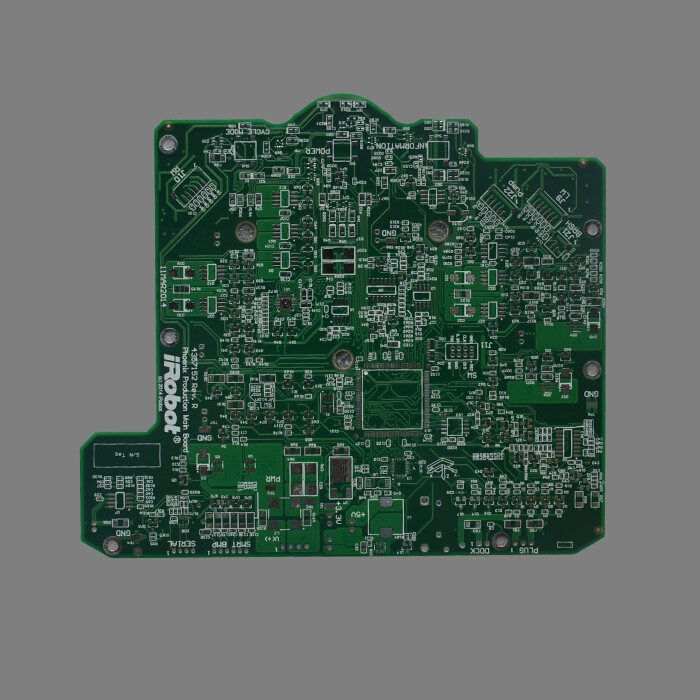
Commodity Name: Digit Robert Computer Printed Circuit Board
Brand Name: HFast
Layers: 4L
Board Thickness: 1.60mm
Minimum Hole Size: 0.20mm
Minimum Line Width: 0.10mm
Minimum Line Spacing: 0.10mm
Color: Green Oil and White Legend
Surface Treatment: Lead Free HASL
Brief Introduction of Computer PCB
Computer PCB board (usually referring to a motherboard) is the core skeleton and nervous system of computing devices such as personal computers (PCs), laptops, servers, etc. It carries all key components such as CPU, memory, expansion cards, storage devices, etc., and provides high-speed and stable data communication and power supply between them. Its design complexity and technological content are top-notch among consumer electronics products.
Characteristics of Computer PCB
1. High complexity multi-layer architecture;
2. Core design for high-speed signal transmission;
3. Design of strong power supply system;
4. Modular expansion interface;
5. Cost and mass production optimization;
6. Thermal deformation control technology.
Core Role of Computer PCB:the hub of the Internet of Things
1. Physical carrier: provides installation locations and electrical connections for CPUs, memory slots, expansion slots (PCIe), storage interfaces (SATA, M.2), chipsets, power interfaces, I/O interfaces (USB, Ethernet, audio), etc.
2. Electrical Interconnection:Complex signal transmission between all components is achieved through precision designed copper foil traces and vias.
3. Power Distribution: * * Convert and distribute power from the power source (via VRM voltage regulation module) to provide accurate, stable, and high current voltage to different components (CPU, GPU, memory, chipset, etc.).
4. Data Highway: Provides high-speed buses (such as DDR channels connecting CPU and memory, PCIe channels connecting CPU and PCIe devices, DMI channels connecting CPU and chipset) and low-speed buses (such as SMBus, LPC, USB 2.0) to build a complete data path.
5. System control and coordination: Coordinate the work of various components, manage the boot process, hardware configuration, and basic input/output through the chipset (or controller integrated into the CPU) and BIOS/UEFI firmware.
Online Message
Application

CONTACT US
Please use the form below to get in touch.
If you need a reply we will get in touch as soon as possible.